Account Statement
  Capital Gain Statement
  Key Information Memorandum
  PAN Updation
  Register / Modify KYC Online
  Nominee Registration
  Email / Phone Updation
  OTM / eNACH Registration
  Voluntary Lock-in for Mutual Fund Folios
  FAQs
FAQs Reach us



DSP TATHYA - April 2024
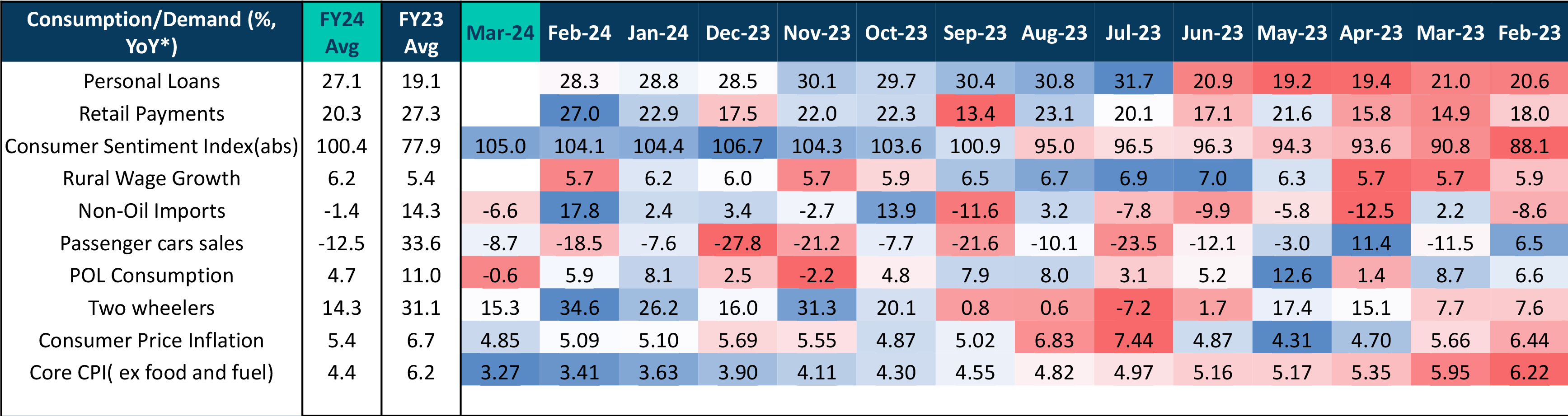
The demand dynamics present decent recovery. However, the rural recovery continues to be a worry, especially in the face of rising food prices. The blip in the consumption of petroleum products could sustain into a longer-term trend, with oil prices rising.
The disinflationary trend in core CPI has sustained the longest time since the start of the series, printing the lowest number with each new release at 3.27% YoY. Sequentially, CPI has remained steady, registering a 0% MoM growth, however, it recorded a 9-month low reading, and the second lowest reading since the repo rate pause.
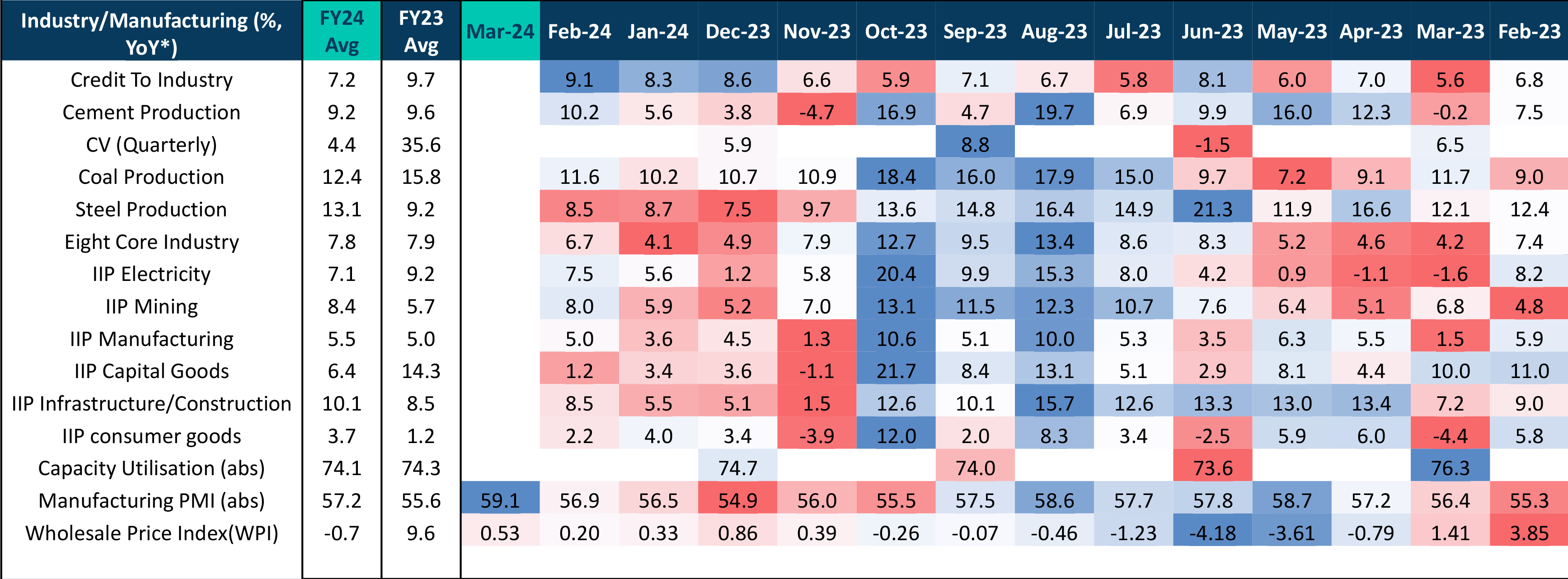
IIP numbers despite a normalized base, paint a not-so-positive picture, signaling subdued production. The bluest PMI ever since the series became available definitely gives reason for better IIP numbers in the upcoming release. An annual negative WPI is an exception, an exception of extremely low raw material costs, and that advantage has exhausted. And now when the exception is on a road towards normalization, the profits could take a hit, in the face of rising input costs.

E-toll have registered the highest collection, largely fueled by the widespread adoption of Fastag and the speeded highway construction at the eve of elections. The sudden downtick in Railway Freight traffic could be a temporary blip, and move towards normalization, once it resumes to normal business. The red streak across the Airport Passenger Traffic is the influence of a distorted base because of the covid dip.

A strong money multiplier suggests the continued strength in credit to deposit ratio for the lagged period. A consistent downtick in inflation, on the back of rising foreign debt flows, sets the stage for lower yields.

On fiscal front, considering elections are underway, it has been quite surprising to not see a major shift in expenditure numbers, remaining aligned with the nonelection years, establishing an average on 3.5Tr, similar to that of 2023, a nonelection year. But with the model code of conduct in effect, this number might see a downtick in the coming months.
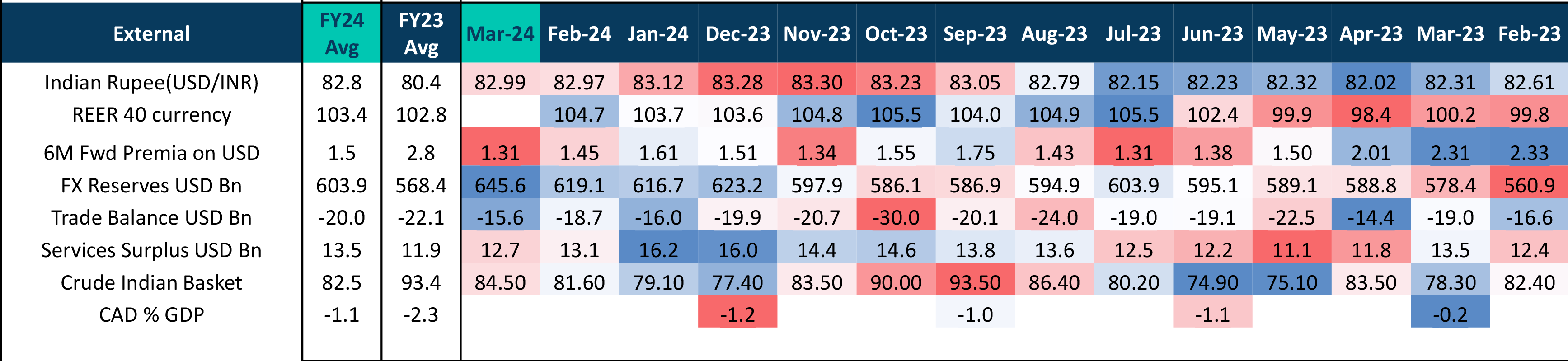
Services surplus witnessed a significant downward revision from its previous month’s number. Additionally, the latest 12.7Bn marks a 9-month low, suggesting a much-anticipated downside in global demand. With oil prices rising amidst the geopolitical tensions, the crude Indian basket sees an uptick
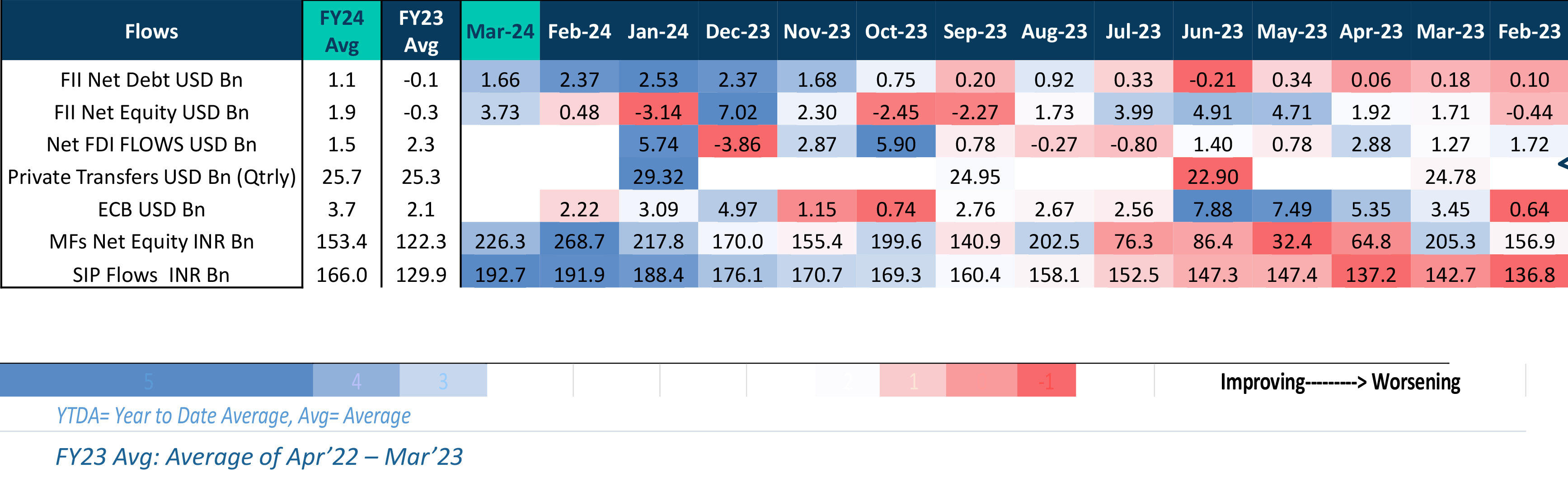
Debt investments from FIIs and ECBs have seen a notable uptick, attributed to India's inclusion in Bloomberg EM index after JP Morgan Bond Index. There has been greater traction towards managed money, thus, a significant rise in MFs and SIPs.
Exhibit 1: India is an outlier for the good…

Exhibit 2: …but Production is lagging behind PMI’s rise
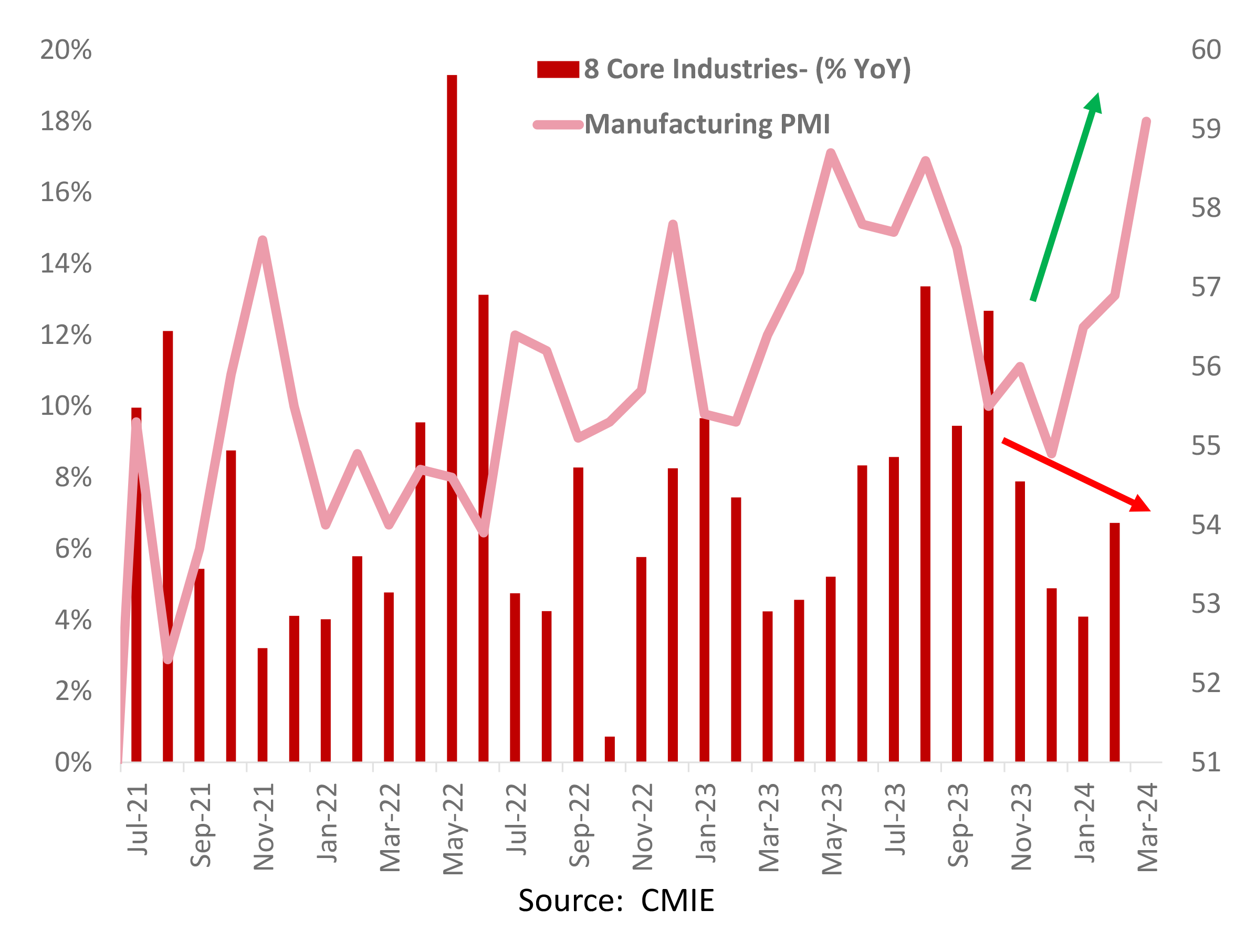
Exhibit 3: At the mercy of the foreign nations, the services number breaks it consistent rising streak, suggesting a fall in global demand
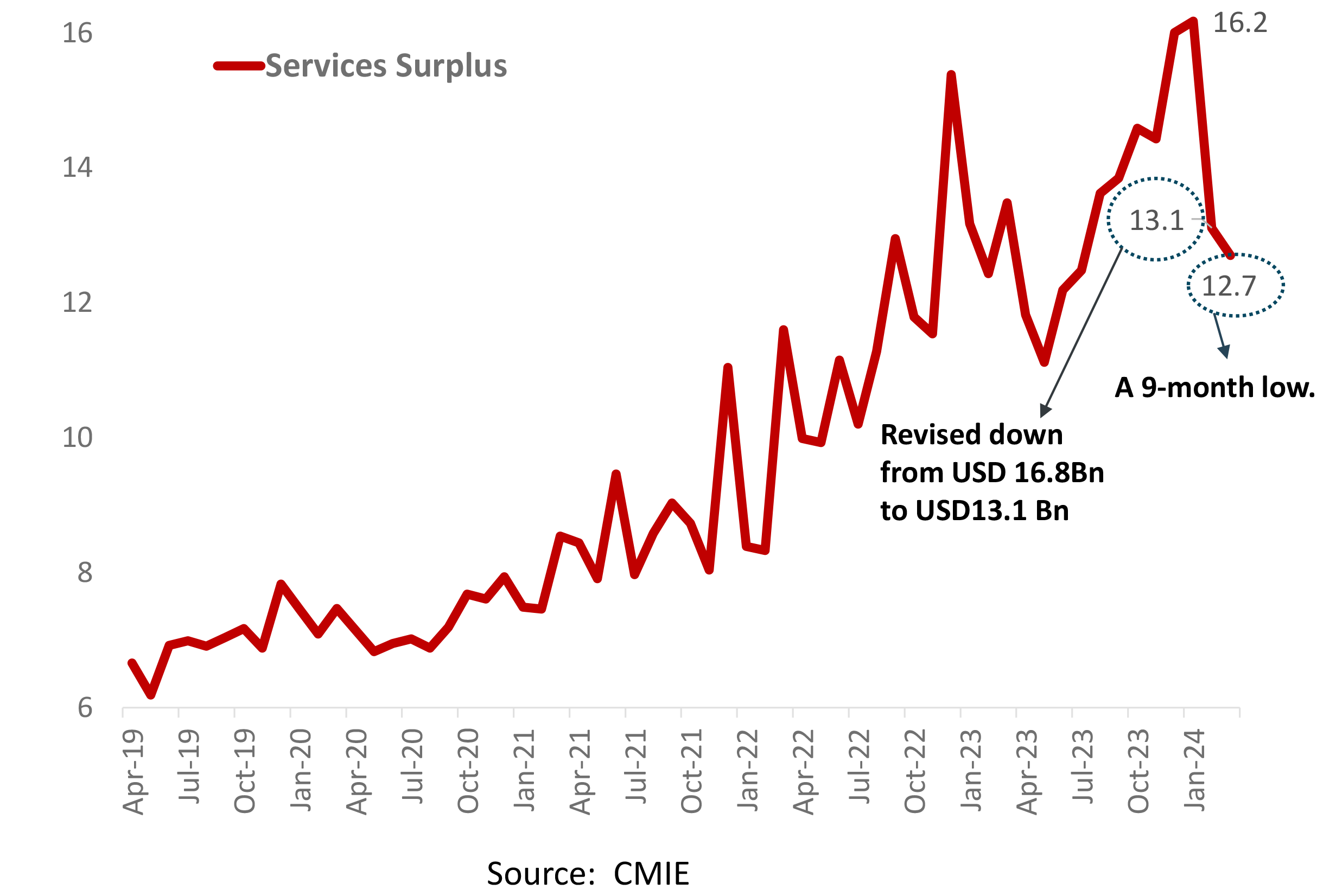
Exhibit 4: The domestic demand, however, remains restricted to premium consumption

Exhibit 5: Outside COVID, this is the first time that food prices have driven more than 70% of the CPI basket.









 .
.