 Account Statement
  Capital Gain Statement
  Key Information Memorandum
  PAN Updation
  Register / Modify KYC Online
  Nominee Registration
  Email / Phone Updation
  OTM / eNACH Registration
  Voluntary Lock-in for Mutual Fund Folios
  FAQs
FAQs Reach us





Summary
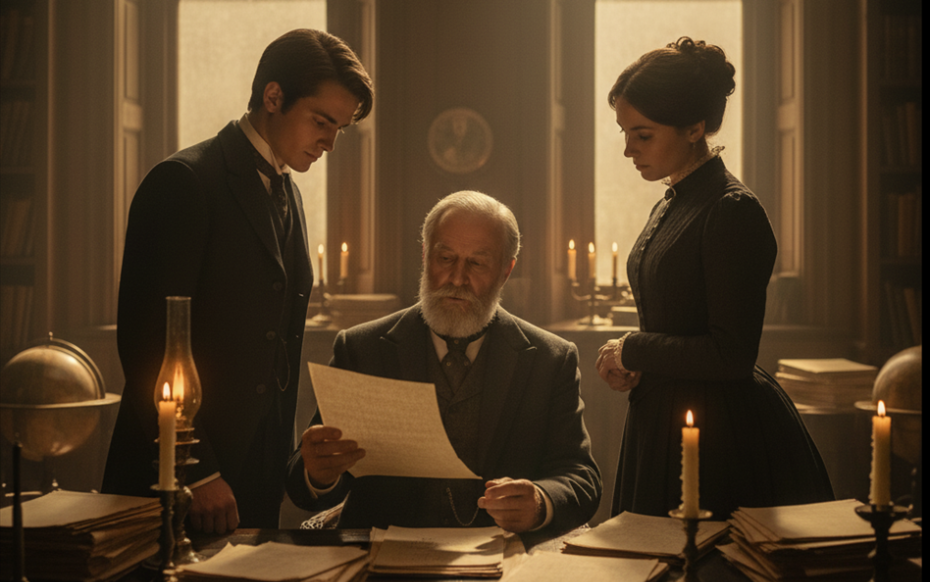
Most wealthy families lose everything within three generations. The Mills refused to. They didn’t rely on luck, markets, or sentiment, but on design. This is the story of a dynasty that proved money doesn’t disappear by accident; it disappears when you don’t build the system to protect it.
In the age of industrial expansion, when fortunes were loud and ambition louder, one family built its wealth on an idea that money without structure does not last.
By the 1880s, America was a marketplace of risk. Banks merged, railroads expanded, and speculation drove every conversation. Ogden Mills Sr., born in 1826, watched this closely. He inherited a banking and real-estate portfolio from his father, Darius Ogden Mills, one of the founders of the Bank of California and an early investor in the gold rush economy. While others focused on growth, he focused on organization.
By the end of the 19th century, the Mills family’s wealth was estimated at over 36 million dollars, (Source: Wikipedia, Aug 2025) equal to more than 1.2 billion today, according to the U.S. Bureau of Labor Statistics. Yet, they avoided attention. Ogden Mills Sr. believed wealth should be administered, not displayed. He built one of America’s first private governance models complete with trustees, audits, and professional boards. The story that follows shows how such order outlasted fortune itself.
The Decisions That Shaped Their Future
The Mills family made three key choices that ensured continuity.
First, they formalized philanthropy. In 1889, the family supported the establishment of the Mills Training School for Nurses, which later became part of Columbia University’s medical system. They also contributed to St. Luke’s Hospital and the Metropolitan Museum of Art. Philanthropy was treated as a family exercise, not as charity.
Second, they professionalized management. Real estate and financial assets were placed under trust administration, with external audits. This structure helped the family maintain liquidity during the economic crises of the early 1900s.
Third, they separated use from ownership. Family members could receive income but not withdraw capital. Records from the Darius Ogden Mills Estate (Smithsonian Archives, 1929) show a fixed 3 percent annual disbursement, a principle still followed by modern endowments.
Resilience in Crisis
When the Great Depression began in 1929, U.S. family wealth fell by nearly 80 percent on average, according to Federal Reserve data. The Mills family retained most of theirs. Their holdings were diversified across real estate, bonds, and long-term trusts. While others sold assets to survive, the Mills trusts continued to fund education and healthcare programs through the 1930s. Their order proved stronger than the market’s chaos.
Today, remnants of that discipline still exist. The Mills College campus in Oakland, now part of Northeastern University, and the Staatsburg State Historic Site in New York both stand as reminders of what structured wealth can achieve. Their legacy continues through foundations that still operate under the same guiding principles.
Lessons in Continuity
Modern family offices often manage large portfolios but lack governance systems strong enough to protect them. The Mills story shows that endurance comes from structure, not size. Governance is not a ceremonial exercise; it is financial hygiene. Families that document, review, and renew their frameworks tend to preserve both wealth and wisdom.
Ogden Mills never set out to build a legacy. He built a system that could operate without him. In a world where markets change faster than memory, which remains the true mark of stewardship. Wealth does not survive on sentiment or secrecy. It endures through clarity and design.
Afterword
The Mills family left behind no empires, no scandals, and no unfinished stories. Their strength was their simplicity. They treated wealth as responsibility, not reward. They built systems that could think long after they were gone. In doing so, they proved that legacy is not what you leave behind, but what keeps working when you no longer can. And that is why, long after their names faded from headlines, their house never fell silent.
Industry insights you wouldn't want to miss out on.
Written by
Disclaimer
All content on this blog is the intellectual property of DSPAMC. The User of this Site may download materials, data etc. displayed on the Site for non-commercial or personal use only. Usage of or reference to the content of this page requires proper credit and citation, including linking back to the original post. Unauthorized copying or reproducing content without attribution may result in legal action. The User undertakes to comply and be bound by all applicable laws and statutory requirements in India.
Mutual Fund investments are subject to market risks, read all scheme related documents carefully.














 .
.

Write a comment