


8.51 lakh people have invested in this fund
 8.51 lakh people have invested
in this fund as of
8.51 lakh people have invested
in this fund as of
Total AUM
₹20,170.28 crores
as of Jun 30, 2026
Age of Fund
19 years 8 months since Nov 14, 2006
Exit Load
1%
upto 12 Months
Ideal holding period
10 Years+
| Large Cap | 15.1% |
| Mid Cap | 68.5% |
| Small Cap | 12.1% |
| Holdings | Weight % |
|---|---|
| Coforge Limited | 3.5 % |
| Cholamandalam Investment and Finance Company Limited | 3.1 % |
| Fortis Healthcare Limited | 2.9 % |
| The Phoenix Mills Limited | 2.7 % |
| Multi Commodity Exchange of India Limited | 2.6 % |
| Bharat Forge Limited | 2.6 % |
| The Federal Bank Limited | 2.6 % |
| Coromandel International Limited | 2.5 % |
| IPCA Laboratories Limited | 2.5 % |
| Voltas Limited | 2.3 % |
| View All Holdings | 27.2 % |
| Credit rating profile | Weight % |
|---|---|
| Cash & Equivalent | 4.3 % |
| Instrument break-up | Weight % |
|---|---|
| TREPS | 4.3 % |
| Holdings | Weight % |
|---|---|
| TREPS / Reverse Repo Investments | 4.3 % |
| Cash & cash equivalents | 0.0 % |
| 4.3 % |
Portfolio turnover ratio
0.24 last 12 months
Performance highlights over last
for
investment
Cumulative returns on
Annual returns
Current value
Good Returns

Negative Returns

vs Category
vs Benchmark

Historical Returns (As per SEBI format)as of with investment of₹10,000
| This fund | Nifty Midcap 150 TRI ^ | NIFTY 50 TRI # | ||||
|---|---|---|---|---|---|---|
| CAGR | Current Value | CAGR | Current Value | CAGR | Current Value | |
Income distribution Cum Capital Withdrawal (IDCW) Distributed
| Record Date | Face Value | IDCW per unit | NAV Before | NAV After |
|---|
| Funds | Annual returns | Current Value | Absolute Growth |
|---|
Click here to view the information ratio of the scheme.
Date of allotment: Nov 14, 2006.
Period for which fund's performance has been provided is computed based on last day of the month-end preceding the date of advertisement
Different plans shall have a different expense structure. The performance details provided herein are of Institutional Plan.
Since inception returns have been calculated from the date of allotment till June 30, 2021
Past performance may or may not be sustained in future and should not be used as a basis for comparison with other investments
Rolling returns have been calculated based on returns from regular plan growth option.
Pursuant to payments of Income Distribution cum Capital Withdrawal, the NAV of the IDCW option(s) of Schemes would fall to the extent of payout, and statutory levy, if any.
^ Fund Benchmark # Additional Benchmark

Vinit Sambre

Abhishek Ghosh
The primary investment objective is to seek to generate long term capital appreciation from a portfolio that is substantially constituted of equity and equity related securities of mid-cap companies. From time to time, the fund manager will also seek participation in other equity and equity related securities to achieve optimal portfolio construction.
There is no assurance that the investment objective of the Scheme will be realized
An open ended equity scheme predominantly investing in mid cap stocks
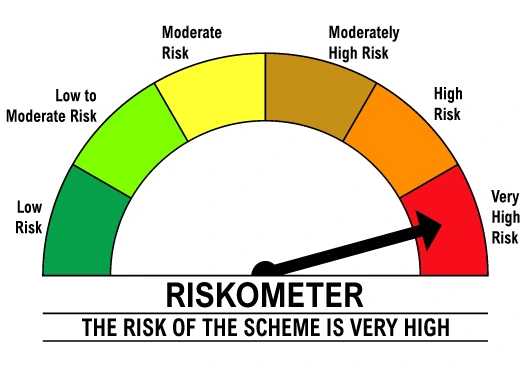
Level of Risk in the fund
| Holding period | Capital gain type | Applicable tax rate |
|---|---|---|
| More than 12 months | Long term | 12.5 % |
| 12 months or less | Short term | 20 % |
Mutual fund taxation is based on the fund's taxation category, sub-category, and holding period. The applicable tax rates are subject to prevailing tax laws, including surcharges, cess, and exemptions. Please consult a tax advisor for personalized guidance. View detailed tax guide
Transaction timelines
| NAV You Get | Cut-off Time | Processing Timeline |
|---|---|---|
| Same-day NAV (if money is received before cut-off) | 3:00 PM (business days) | Units added to your folio on T+1 days (if money is received before cut-off). |
| NAV You Get | Cut-off Time | Processing Timeline |
|---|---|---|
| Same-day NAV (if request is placed before cut-off) | 3:00 PM (business days) | Redemption processed on T+1 business days. Money credited to your bank account by T+2 business days. |
| NAV You Get | Cut-off Time | Processing Timeline |
|---|---|---|
| Same-day NAV (if request is placed before cut-off) | 3:00 PM (business days) | Switch-out processed on T+2 business days |
| NAV You Get | Cut-off Time | Processing Timeline |
|---|---|---|
| NAV of this scheme | 3:00 PM (business days) | Units added on T+1 business days after the switch-out from the source scheme. |
| NAV You Get | Cut-off Time | Processing Timeline |
|---|---|---|
| NA | NA | Money credited instantly. |
Mid Cap funds invest in mid-sized companies that have the potential to become big. SEBI defines companies ranked 101st to 250th companies by market capitalization as midcap companies. As per SEBI's, mandate midcap funds should invest minimum 65% of their assets in midcap companies. The balance 35% in midcap funds can be invested in large cap, small cap or other asset classes.
Mid-sized companies like these can offer more growth potential than larger companies but at lower risk levels than smaller-sized companies. Midcap companies can be market leaders in certain industry sectors or sub-sectors / niches. They can also be challengers to large caps in certain sectors. These businesses tend to be less capital intensive, more nimble and innovative than large caps. At the same time, they tend to be more stable than small caps due to their size and balance sheet strengths.
Mid-sized companies are often under-researched compared to large caps, leading to more inefficiency in price discovery.. This provides opportunities to fund managers of identifying stocks that are trading at significant discounts to their fair values and benefits of valuation re-rating in the future. This can create significant alphas for investors.
From a risk / return perspective, midcap funds are somewhere between large caps and small caps. They offer greater growth potential than large caps and are less volatile than small caps.
Long term investors & are willing to remain invested for at least 5 years.
SIP investors who are disciplined to continue SIP for longer tenure.
Investors who are prepared for higher volatility in the quest for higher returns.
Experienced investors who can take advantage for market corrections as good opportunities to invest more.
Investors can tactically allocate 10-15% or even higher of their overall portfolio to midcap funds depending on their risk appetite.
It's important for investors to understand the associated risks, and align their investment goals with the risk / return characteristics of mid-cap funds.
When investors redeem their mid-cap fund units, they may incur capital gains or losses. There are two types of capital gains: short-term and long-term depending on the investment holding period.
Short-term capital gains: If the holding period of mid-cap fund units is less than 1 year, gains (if any) are considered to be short-term capital gains. Short-term capital gains in equity funds are taxed at 15%.
Long-term capital gains in excess of Rs 1 lakh in a financial year are taxed at 10%.
Income Distribution cum capital withdrawals (IDCW) or dividends are taxed as per the income tax rate of the investor.
Click on the green INVEST button on the left-hand side of the webpage (Resend

 Share on WhatsApp
 Share on X
 Share on LinkedIn

 Portfolio
 Brochure

 Scheme Documents


